Yoga for Lower Back Pain: Five Gentle Poses to Try
Chronic lower back tension is a common experience that can arise from prolonged sitting, stress, or muscle imbalances. Many individuals seek supportive practices that work gently with the body rather than pushing it into strain. Yoga offers a framework for exploring movement and stillness in ways that may help reduce discomfort and improve functional mobility. The poses described below are designed to be accessible, focusing on slow transitions and mindful breathing.
It is important to approach any movement practice with awareness of individual limits. Lower back conditions vary widely, and what feels supportive for one person might not be suitable for another. Consulting a healthcare professional before beginning a new routine is always recommended. The following poses are intended to be practiced with patience and without force, allowing the body to guide the depth of each stretch.
Each pose in this sequence emphasizes spinal mobility and muscle release. Breath awareness is woven into the instructions, as coordinated breathing can help calm the nervous system and encourage relaxation in tight muscles. Holding these poses for several breath cycles, rather than rushing through them, often provides the most benefit.
Cat-Cow Stretch (Marjaryasana-Bitilasana)
This gentle spinal warm-up is often used to bring mobility to the entire back. Starting on hands and knees, with wrists aligned under shoulders and knees under hips, the spine moves between flexion and extension. On an inhale, the belly drops toward the floor while the gaze lifts slightly, creating a gentle arch in the lower back. On an exhale, the spine rounds upward, drawing the navel in and tucking the chin toward the chest.
The movement is slow and coordinated with the breath, allowing each vertebra to participate. Some individuals find that repeating this flow for eight to ten breath cycles helps loosen the lumbar region and reduce stiffness. The Cat-Cow stretch is not intended to force a deep arch or round, but rather to explore the range of motion that feels available in the moment. If wrist discomfort arises, placing a folded towel under the hands or making fists can offer support.
This pose can serve as a baseline for assessing how the lower back feels on a given day. Noticing asymmetries or areas of holding can inform modifications for subsequent poses.
Child’s Pose (Balasana)
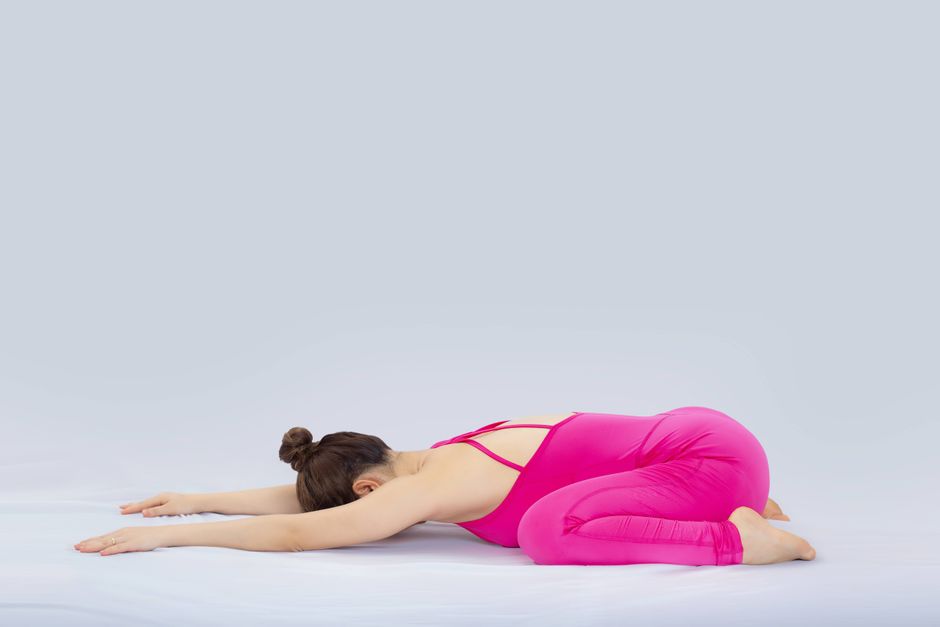
Balasana is a resting posture that allows the spine to lengthen and the lower back to soften. From a kneeling position, the hips sit back toward the heels while the torso rests forward, either with the forehead on the floor or on a blanket. The arms may extend forward or rest alongside the body, depending on comfort. This pose gently stretches the muscles of the lower back, hips, and thighs.
For those with limited hip mobility, placing a cushion or folded blanket between the thighs and calves can make the position more accessible. The breath may be directed toward the back of the rib cage, encouraging a sense of spaciousness. Holding Child’s Pose for thirty seconds to two minutes can provide a quiet pause in the practice. It is common to feel a gradual release of tension in the lumbar area during this pose.
If any sharp pain occurs, the position should be modified or exited slowly. Child’s Pose can also be used as a counterpose after backbends or twists, offering a moment of integration.
Supine Knee-to-Chest (Apanasana)
Lying on the back, this pose uses gentle pressure to mobilize the lower back and sacroiliac area. Starting with both knees bent and feet flat on the floor, one knee is drawn toward the chest while the other foot remains planted or extended. The hands clasp around the shin or behind the thigh, and the lower back is allowed to press into the floor. After a few breaths, the leg is released and the other side is drawn in.
Eventually both knees can be brought toward the chest simultaneously. Rocking gently from side to side may add a light massage to the spine. This pose can help release the psoas and hip flexors, which often contribute to lower back tension when tight. Holding each side for five to six breaths, or both legs together for several deep breaths, is a common approach.
Individuals with herniated discs or acute back pain should approach this pose with caution, as excessive pulling may aggravate certain conditions. Keeping the head on the floor and the neck relaxed supports spinal alignment.
Sphinx Pose (Salamba Bhujangasana)
Sphinx Pose is a gentle backbend that strengthens the spine while promoting extension in the lower back. Lying on the stomach, the forearms are placed on the floor directly under the shoulders, elbows hugging the ribs. The legs extend behind, hip-width apart, with the tops of the feet pressing lightly into the mat. On an inhale, the chest lifts just enough to create a mild curve in the lumbar region, keeping the lower ribs connected to the floor.
The emphasis is on length rather than height. Engaging the glutes and thighs subtly can support the lower back. This pose may feel more accessible than deeper backbends for those with chronic tension, as it requires less muscular effort. Holding Sphinx Pose for three to five breaths, repeated once or twice, can build endurance and awareness in the spinal extensors.
If any sharp or centralized pain occurs in the lower back, the lift can be reduced or the pose can be practiced with a folded blanket under the hips for support. Sphinx Pose is often included in sequences aimed at improving posture and counteracting the effects of prolonged sitting.
Reclined Spinal Twist (Supta Matsyendrasana)
Twists are valued in yoga for their potential to increase spinal mobility and release tension in the deep muscles of the back. In the reclined version, the body lies on the back with knees bent and feet on the floor. The arms extend out to the sides in a T‑shape. On an exhale, both knees lower to one side while the head turns gently in the opposite direction. The knees may be stacked or separated by a block or bolster, whichever feels most comfortable.
Staying in the twist for four to six breaths before switching sides allows the connective tissue and muscles to respond gradually. The twist originates from the thoracic and lumbar segments, not from the neck. Keeping the shoulders anchored to the floor helps maintain stability. Some individuals find that placing a pillow under the knees adds support if the stretch feels too intense in the hip or lower back.
This pose is not a forceful rotation but a gentle unwinding. If any discomfort arises in the sacroiliac joint, the knees can be elevated slightly or the twist can be performed with legs extended. After completing both sides, it can be beneficial to draw the knees back to the chest for a few breaths to integrate the movement.
Incorporating These Poses Into a Regular Practice
Consistency often matters more than duration when exploring movement for lower back support. Practicing these five poses two to three times per week, or even daily for a few minutes, may help maintain spinal flexibility and reduce the buildup of tension. Each session can begin with Cat-Cow for warm‑up and end with Child’s Pose or the reclined twist for cooling down.
Listening to the body’s signals is essential. If a pose feels intrusive, reducing the range of motion or using props such as blankets, blocks, or bolsters can make the experience more sustainable. Sage Yoga offers classes and resources that emphasize gentle therapeutic approaches, where practitioners can explore these poses under guided instruction. No single practice replaces medical advice, but a mindful routine can serve as a complementary tool for those navigating chronic lower back discomfort.